
Introduction
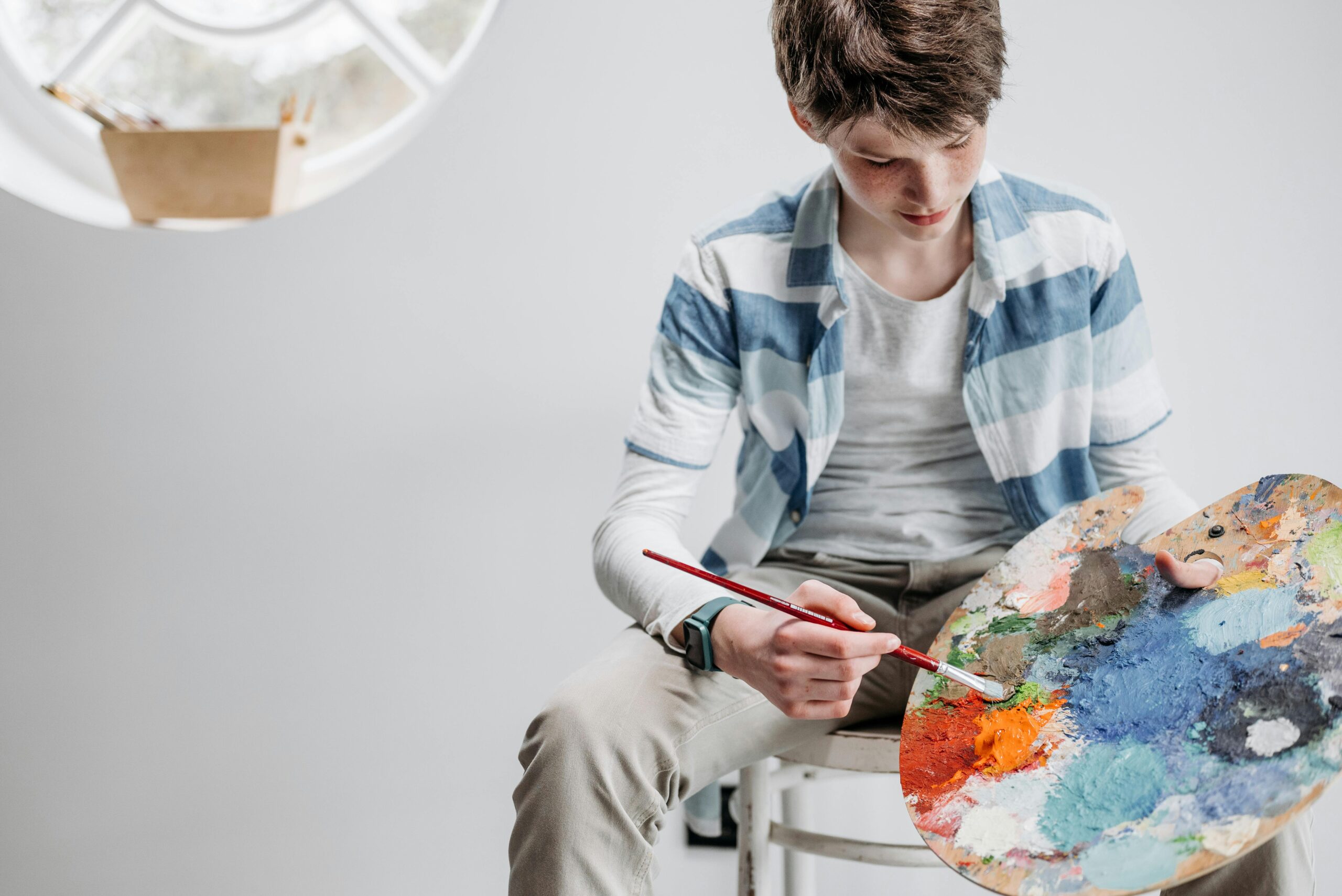
The following essay will provide an outline of art therapy and its potential as a therapeutic intervention for students at risk of early school leaving, or ‘ESL’. This topic is of personal interest to me, due to being an early school leaver (ESL) myself. I was struck by, and somewhat validated by, the existence of a formal term for this experience. As a young person in a single-parent household in the early 2000s, little support was offered to address my struggles attending school or the reasons underlying it. I was pleased to learn that today, programs which include art therapy are being utilised to address ESL and emotional barriers to school attendance (Goodfellow-Pemsel, 2025) and felt eager to explore this further.
ESL is ultimately an outcome of intersecting personal and interpersonal issues (Pikkarainen et al., 2021) and often results in a diminished quality of life for the students affected (Janmaat et al., 2015). I have come to understand that my own experience was a result of mental health deterioration and difficulty fitting in to the educational system. If this had been recognised and addressed at the time, perhaps with an intervention like art therapy, I believe my engagement with education could have improved, leading to a higher quality of life after leaving school. I will explore the potential of art therapy and its benefits for improving the mental health of students at risk of ESL.
Art Therapy: Defined
Art therapy is the practice of holding space for a client or patient to externalise emotions, thoughts or feelings through the use of art mediums, that would otherwise remain unexpressed (Dryden, 1992). Its essence, according to Dalley (2008, p. xiii) ‘lies in the therapeutic outcome of the activity of creating something’. The term ‘art therapy’ was first coined in Britain by Adrian Hill in 1942 (Junge, 2015).
Psychodynamic theory, developed by Sigmund Freud, played a key role in the foundation of art therapy (Junge, 2015). Margaret Naumburg, the ‘mother of art therapy’ (Bush, 2014) stated that art therapy is ‘psychoanalytically oriented’ (Naumburg, 1953, as cited in Case & Dalley, 2014, p. 2) and that its process is based on allowing unconscious thoughts and feelings to ‘reach expression in images rather than words’ (Naumburg, 1958, as cited in Dalley, 2008, p. xiii).
The work of Carl Jung has also provided a theoretical model for many art therapists (Dryden, 1992). Rather than mere ‘sublimation’ as considered by Freud, Jung regarded art and image-making as a primary means of communication between the conscious and unconscious, and artists as ‘drawing upon the healing and redeeming forces of the collective psyche’ (Case & Dalley, 2014, p. 240). Using a Jungian framework, Gilbert and Irene Champernowne founded Withymead house in 1942 – the first therapeutic centre dedicated to art therapy (Junge, 2015). In 1964, the British Art Therapy Association was established (LINA, n.d.), followed by the formation of the Irish Association of Creative Arts Therapists in Ireland in 1986 (IACAT, n.d.).
Early School Leavers: Influences & Impacts
The European Commission has defined early school leavers or ‘ESL’ as ‘young people who leave education and training with only lower secondary education or less [e.g. below GCSE grade C]’ (European Commission, 2013, as cited in Janmaat et al., 2015, p. 8).
There are myriad reasons why a young person might leave school early. Personal issues and challenging social conditions in school or at home, can set up an environment where ESL becomes a serious potentiality. It is often the culmination of various factors, including family breakdown, abuse at home, bullying, living in care, impacts of local crime, drug addiction, lower social class, low self-esteem, and lack of motivation (Janmaat et al., 2015). Relationship quality between teachers and students, alongside poor interactions with peers, is another contributing factor (Camilleri & Giovanni, 2018). ESL has been linked to lower levels of students’ satisfaction of basic psychological needs such as a lack of relatedness, support after absences, and not feeling accepted by peers (Pikkarainen et al., 2021). These factors exist within a broader educational framework based on the Prussian model (Ramirez & Boli, 1987) of maintaining social order, conformity and obedience (Paglayan, 2022), creating a one-size-fits-all structure that itself may contribute to disengagement and distress.
The impact of ESL on young people cannot be understated. Lowered standards of living, satisfaction with social life, education and employment, as well as increased social exclusion, loneliness and mental health issues, all contribute to the sense of a less meaningful life (Camilleri & Giovanni, 2018), feelings of failure, and being seen negatively by society (Janmaat et al., 2015). Rates of crime, violence, substance abuse and suicide are significantly higher among ESL and are, reflexively, also drivers of early school leaving (Janmaat et al., 2015), indicating a self-reinforcing feedback loop.
Applying art therapy as an intervention for students at risk of ESL
Addressing such a complex intersection of factors is not straightforward. Where art therapy can play a role is in mitigating psychological impacts, such as by decreasing anxiety levels. Kostyunina & Drozdikova-Zaripova (2016) define school anxiety as a ‘type of anxiety characteristic of […] situations of the child’s interaction with the various components of [the] school educational environment’. They note that adolescents with high school anxiety levels often struggle with timidity, lower levels of learning motivation, self-actualisation, and have difficulties communicating. Their study aimed to test the effectiveness of mandala art therapy in reducing levels of school anxiety.
Mandala art therapy is a method of utilising the spontaneous creation of a circle. Drawing from Carl Jung, the researchers discuss the use of the mandala as a form of protected space, beneficial in experiences of stress or crisis. Notably, the study acknowledges the tendency for anxiety in children to increase each year, and the general negative emotions experienced at school. This suggests that school anxiety is not solely an individualised response (Smith, 2023), but reflective of anxiogenic features of the school environment itself.
The ‘Magic Power of a Circle’ program was implemented with adolescents aged 11-16. Participants were identified using a questionnaire by B. N. Phillips to evaluate the relation between anxious states and various areas of school life. The questionnaire was conducted before and after the implementation of the mandala art therapy program. After completing the program, levels of high anxiety among students were shown to have decreased from 16.5% to 8.9% and the number of students with low levels of anxiety increased by 6.3%. A second questionnaire developed by N. Luskanova was used at both stages of the study to measure motivation levels, and showed that the number of students with low motivation fell by 3.7%. These results indicate a significant effect, demonstrating the impact of mandala art therapy on anxiety and motivation.
Another study by Moula (2021) looked at 62 school children aged 5-12 years with emotional and behavioural difficulties. The students were followed after participating in a range of arts-based therapies. The study focused on creativity as a key therapeutic function, reiterating the ability of the creative process in accessing repressed or unconscious material. Through participant observations, questionnaires, interviews, and biomarkers, the results showed increased feelings of positive emotional expression, group bonding, self-acceptance, empowerment and optimism.
Gender differences in ESL and the impact of art therapy on at-risk males
There is a significant gender difference in rates of ESL, with males being at a higher risk of early drop out compared to females. In a study of Italian students by Borgna & Struffolino (2017) the gap was as large as 3:2. The authors explain this partially by discrepancies in opportunities in the labour market; a ‘pull factor’. However, they also identified several ‘push factors’ including gaps in academic performance, lower resilience to academic failure, relational problems with teachers and peers, disciplinary issues, and feeling out of place in the school environment.
Ramirez et al. (2020) assessed the effectiveness of group art therapy in reducing social and emotional issues in adolescent boys living in poverty. Results were mixed, but showed that art therapy had a positive effect in average-performing boys in areas of personal adjustment, self-esteem, and self-expression. It was also shown to increase positive peer interactions and expression of uncomfortable feelings.
A pair of studies — one focused on boys with Oppositional Defiant Disorder (Khadar et al., 2013), and another on boys with Separation Anxiety Disorder (Khadar et al., 2013) — both utilised a program of twelve 40-minute painting therapy sessions. The boys experienced a significant decrease in symptoms, measured using the Structured Diagnostic Interview based on DSM-IV-TR criteria.
Finally, Abdallah (2009) presents a touching case study of ‘Travis’, a 15 year old boy who utilised art therapy to help with issues related to bullying, isolation and difficulty relating to a new school environment. The results showed that Travis’ relationship with his peers, and his sense of self, were improved through the development of resilient characteristics after partaking in art therapy sessions.
Challenges & Limitations
Although these findings are promising in demonstrating how art therapy can mitigate school-related psychological distress, there are some challenges. Mixed findings in the study with boys living in poverty (Ramirez et al., 2020) showed no significant improvement specifically in the At-Risk category (boys with greater academic deficiencies). The group-setting nature of the sessions may have impacted this, as such settings may be unsuitable for these students in particular. The At-Risk group also showed some level of discomfort using art materials, potentially due to associations with regular academic activity. This should be taken into consideration when working with students that are at-risk, as they may be more sensitive to the therapy setting or medium itself.
The relationship between the art therapist and student should also be considered. Moula (2021) notes that the potential for increased affection and positive regard for facilitators in longer therapy programs may result in more positive research outcomes, representing a confounding variable. However, in real-world practice, this may be integral to the effectiveness of the intervention, in that increased familiarity and feelings of emotional safety might enhance engagement with the therapeutic process.
Absenteeism is another obvious challenge for utilising art therapy correction programs to reduce levels of ESL. This might be mitigated by allowing for less linear/more modular therapy programs to reduce anxiety about missing sessions, and by creating an atmosphere that is more welcoming and engaging than the traditional classroom environment.
Conclusion
It is clear that art therapy programs have a positive impact on the psychological wellbeing of young students, which may be beneficial for those at risk of ESL. Due to the nature of ESL being impacted by a multitude of factors both inside and outside of the school context, it is difficult to address every issue faced by these students. However, robust art therapy programs can provide a space for students to cultivate a sense of greater sense of self-esteem, resilience, a more relaxed state of being, and the opportunity to work through emotions or negative experiences that they may be unable to deal with elsewhere. This can lead to an improved ability to engage with peers, teachers, and educational frameworks, allowing young students to engage more fully and increase their chances of completing their education, ultimately leading to more satisfactory, meaningful lives.
Finally, it is important to consider the broader context surrounding the problem of school anxiety. High anxiety levels in school children may not arise in a vacuum, but may instead reflect deeper structural issues in state educational systems. Standards of rigidity and conformity may be outdated and contributing to student distress. We might consider art therapy not simply as a mitigating modality, but as an antidote to a larger problem: that the current educational model does not meet many students’ psychological and emotional needs. This raises further questions, not only about how to reduce early school leaving, but about whether our educational systems provide young people an adequate framework for achieving a successful life after leaving school.
Bibliography
Abdallah, S. (2009). Art therapy, resilience, and adolescents in alternative learning environments: case study of 15 year old boy’s creative journey (Doctoral dissertation, Concordia University).
Borgna, C., & Struffolino, E. (2017). Pushed or pulled? Girls and boys facing early school leaving risk in Italy. Social Science Research, 61, 298–313.
Bush, L. (2024, May 14). The mother of art therapy. JewishCurrents. https://jewishcurrents.org/may-14-mother-art-therapy
Camilleri, M., & De Giovanni, K. (2018). School as experienced by early school leavers.
Case, C., & Dalley, T. (2014). The handbook of art therapy. Routledge.
Dalley, T. (2008). Art as therapy: An introduction to the use of art as a therapeutic technique. Routledge.
Dryden, W., Waller, D., & Gilroy, A. (1992). Art therapy: A handbook. McGraw-Hill Education (UK).
Goodfellow-Pemsel, J. (2025) Case study: Art therapy for pupils with emotional barriers to school attendance. OneEducation. https://www.oneeducation.co.uk/case-study-art-therapy-for-pupils-with-emotional-barriers-to-school-attendance/
Irish Association of Creative Arts Therapists (IACAT). (n.d.). About IACAT. https://www.iacat.ie/Irish-Association-of-Creative-Arts-Therapists
Janmaat, J. G., Hoskins, B., & Franceschelli, M. (2015). Early school leavers and NEETs in the UK. Trends, consequences and policies. Scuola democratica, 6(2), 455–470.
Junge, M. B. (2015). History of art therapy. The Wiley handbook of art therapy, 7-16.
Khadar, M. G., Babapour, J., & Sabourimoghaddam, H. (2013). The effect of art therapy based on painting therapy in reducing symptoms of oppositional defiant disorder (ODD) in elementary school boys. Procedia-Social and Behavioral Sciences, 84, 1872–1878.
Khadar, M. G., Babapour, J., & Sabourimoghaddam, H. (2013). The effect of art therapy based on painting therapy in reducing symptoms of separation anxiety disorder (SAD) in elementary school boys. Procedia-Social and Behavioral Sciences, 84, 1697–1703.
Kostyunina, N. Y., & Drozdikova-Zaripova, A. R. (2016). Adolescents’ School Anxiety Correction by Means of Mandala Art Therapy. International Journal of Environmental and Science Education, 11(6), 1105-1116.
LINA: Art Therapy Foundation (n.d.). History of art therapy. LINA.https://linatherapy.app/history-of-art-therapy
Moula, Z. (2021). “I didn’t know I have the capacity to be creative”: children’s experiences of how creativity promoted their sense of well-being. A pilot randomised controlled study in school arts therapies. Public Health, 197, 19-25.
Paglayan, A. S. (2022). Education or indoctrination? The violent origins of public school systems in an era of state-building. American Political Science Review, 116(4), 1242-1257.
Pikkarainen, M. T., Hakala, J. T., & Kykyri, V. L. (2021). Why did they leave school? A self determination theory perspective into narratives of Finnish early school leavers. International Journal of Educational Psychology: International Journal of Educational Psychology, 10(1), 48-72.
Ramirez, F. O., & Boli, J. (1987). The political construction of mass schooling: European origins and worldwide institutionalization. Sociology of education, 60(1), 2–17.
Ramirez, K., Haen, C., & Cruz, R. F. (2020). Investigating impact: The effects of school-based art therapy on adolescent boys living in poverty. The Arts in Psychotherapy, 71, 101710.
Smith, H. (2023, March 17) The impact of a ‘one-size-fits-all’ education system. Broken Custodians (UsForThem). https://usforthem2020.substack.com/p/the-impact-of-a-one-size-fits-all